Still Waters, Big Fish: The Case for Utah's Overlooked Lake and Reservoir Fisheries
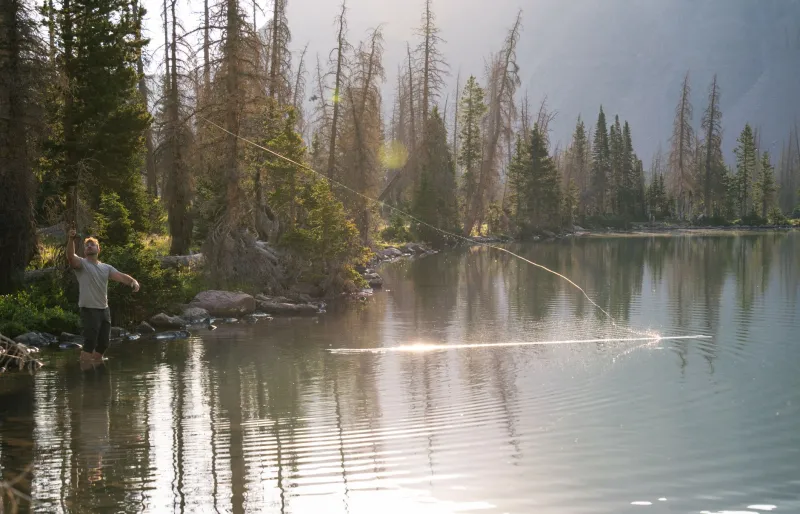
Ask most anglers to name Utah's best fishing destinations and you'll hear the same answers every time — the Green River below Flaming Gorge, the Provo River tailwater, maybe the Logan River if they're feeling adventurous. Rivers dominate the conversation. They always have.
But here's the thing: while everybody's lined up elbow-to-elbow on those famous stretches of moving water, Utah's stillwater fisheries are sitting largely untouched, growing some genuinely impressive fish, and waiting for the anglers willing to look past the hype.
Stillwater fishing — lakes, reservoirs, high-mountain ponds — doesn't carry the same romantic weight as wading a river with a fly rod. There's no current to read, no technical mending, no drift to dial in. But that perception is exactly why these places stay uncrowded. And uncrowded, in Utah's increasingly busy outdoor scene, is worth its weight in gold.
Why Stillwaters Get Overlooked (And Why That's Your Advantage)
Part of the bias against lake fishing is cultural. Fly fishing has long been tied to moving water, and the sport's mythology — Hemingway, Maclean, all of it — is built around rivers. Stillwater techniques don't photograph as dramatically. There's no white water backdrop, no classic riffle-pool-run structure to frame a hero shot.
But trophy trout don't care about aesthetics. They care about food, cover, and oxygen. And Utah's reservoirs deliver all three in abundance.
Large stillwater environments support enormous food chains. Midges, damselflies, leeches, scuds, and baitfish populations thrive in these systems. Trout that have access to that kind of buffet grow fast and grow heavy. A five-pound rainbow that would be a genuine trophy on a pressured tailwater is almost routine on the right Utah reservoir.
The other advantage? You're not locked into a single stretch of water. Stillwater fishing rewards mobility. Fish move with season, temperature, and food availability. Learning to find them is its own skill set — and once you crack it, you're consistently ahead of the crowd.
Seasonal Patterns Worth Knowing
Stillwater trout behavior follows temperature and food availability more rigidly than their river cousins, which makes seasonal timing a critical part of the puzzle.
Spring is arguably the best time to be on Utah's lakes. As ice recedes and water temperatures climb into the 45–55°F range, trout move aggressively into the shallows. They're feeding hard after winter, and they're accessible without specialized gear. Damselfly nymph patterns, leeches, and chironomid (midge) setups all produce well during this window. Early morning and late evening are prime, but honestly, spring fish will eat throughout the day if conditions are right.
Summer pushes fish deeper as surface temperatures rise. This is when a floating line stops working and you need to think about intermediate or full-sink lines to reach fish holding in the thermocline — that band of cooler, oxygenated water that forms in stratified lakes. Mornings and evenings still offer surface action during midge or damselfly hatches, but midday fishing means going deep.
Fall brings fish back toward the surface and shoreline structure. Browns especially get active and territorial in October and November, staging for spawning runs. Some of the biggest brown trout of the year come out of Utah's reservoirs in the fall. It's also when crowds thin significantly, which makes the fishing feel even better.
Winter is underrated. Ice fishing on Utah's high reservoirs has a dedicated following for good reason. Perch, tiger trout, and cutthroat are accessible through the ice on spots like Strawberry Reservoir, and the solitude is unmatched.
Stillwater Tactics That Actually Work
If you're approaching a lake with river tactics, you're going to struggle. The approach is fundamentally different.
The most effective stillwater method for fly anglers is the indicator/chironomid setup. It's not glamorous — you're essentially suspending a small midge pupa pattern under a strike indicator at a precise depth — but it is devastatingly effective on Utah lakes. The key is finding the right depth. Fish often feed in a very specific column, and a few feet off can mean the difference between a slow day and a banner one.
Stripping streamers along drop-offs and submerged structure is another go-to approach. A floating or intermediate line with a leech or baitfish pattern worked slowly along a depth change will find predatory trout almost anywhere in the state. Don't rush the retrieve. Stillwater fish often follow a fly for a long distance before committing.
For spin anglers, tube jigs and small swimbaits worked along structure produce year-round. Kastmasters and other spoons are classics for a reason — they cover water quickly and trigger reaction strikes from aggressive fish.
Utah Lakes Worth Your Time
Strawberry Reservoir is the obvious starting point. Located about 23 miles southeast of Heber City, it's Utah's most productive trout fishery by volume. Cutthroat and rainbow consistently run large here, and the reservoir is big enough that you can find solitude even on busy weekends if you're willing to move away from the main boat ramps.
Flaming Gorge Reservoir gets attention for its kokanee salmon runs and record-class lake trout, but it's legitimately massive — over 90 miles long — and most of it sees minimal pressure. The upper arms near the Wyoming border are especially underexplored.
Fish Lake sits at nearly 8,800 feet on the Fishlake Plateau and holds one of the largest splake (brook trout/lake trout hybrid) populations in the state. It's scenic in a way that rivals anything in the Uintas, and the fishing pressure is surprisingly light outside of peak summer weekends.
Panguitch Lake in the southwest part of the state is a consistent producer for rainbow and brown trout and serves as a great base for exploring the surrounding Cedar Breaks and Bryce Canyon country while you're at it — making it a natural fit for a longer road trip itinerary.
For those willing to earn their fishing, the High Uintas hold dozens of alpine lakes accessible only by trail. Most are cutthroat fisheries, and the combination of wilderness scenery and willing fish makes the hike absolutely worth it.
Gear Up Accordingly
Stillwater fishing doesn't demand a massive gear investment, but a few specifics make a real difference. A 9- to 10-foot fly rod in a 4 or 5 weight handles most lake situations well. A selection of line types — floating, intermediate, and a slow-sink full-sink — covers the water column across seasons. For spin anglers, a medium-light setup with 6- to 8-pound fluorocarbon covers most bases.
A pair of polarized sunglasses isn't optional. Reading stillwater structure — drop-offs, weed edges, submerged points — requires the ability to see into the water, and polarized lenses turn a guessing game into a strategy.
The Bottom Line
Utah's rivers are genuinely great. Nobody's arguing otherwise. But if consistent action, less pressure, and legitimate trophy potential sound appealing, the state's stillwater fisheries are ready to deliver — and most of them have been waiting quietly while everyone else fights for elbow room on the Provo.
Cast off the assumptions. The still water might just be where your best Utah fishing day is waiting.