When Less Gets You Killed: The Hidden Dangers of Going Ultralight on Utah's Desert Rock
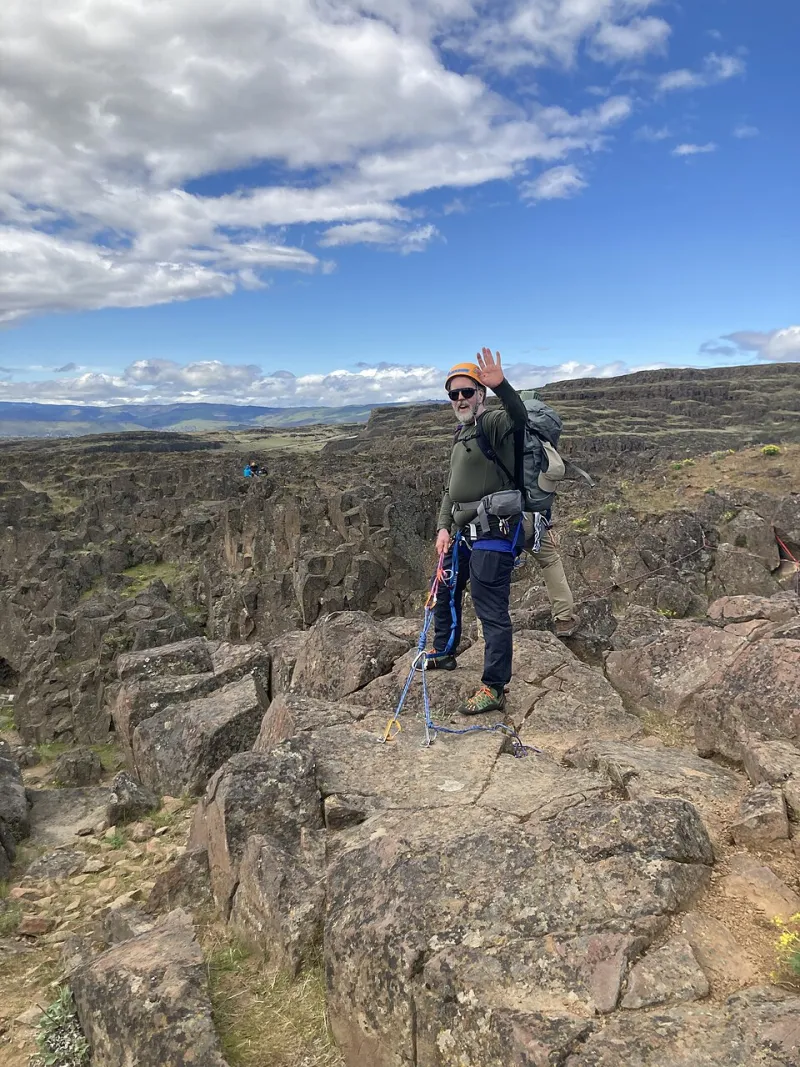
Photo: Mattsjc, CC BY 4.0, via Wikimedia Commons
There's a certain swagger that comes with a trimmed-down rack. You've weighed every piece, cut the tags off your harness, and swapped your haul bag for a stuff sack that fits inside a daypack. You look fast. You feel fast. And on a granite peak in the Sierras or a limestone sport crag in the Rockies, you might actually be fast without sacrificing much.
But step onto Utah's Wingate sandstone, its Navajo slickrock domes, or the crumbling Entrada towers that frame Moab's skyline, and the math changes in ways that aren't always obvious until something goes badly wrong.
The ultralight climbing trend—borrowed heavily from the ultralight backpacking world—has real merit in the right context. The problem is that Utah's desert geology is one of the most unforgiving environments to apply it carelessly. Search-and-rescue teams across the Colorado Plateau have watched the trend accelerate, and they're not exactly enthusiastic about what they're seeing.
The Sandstone Problem Nobody Talks About
Granite is predictable. Limestone is mostly predictable. Sandstone, especially the stuff that defines southern Utah's climbing landscape, is not.
The rock is porous, often soft, and structurally inconsistent in ways that punish gear minimalism hard. Cracks that look bomber from the ground can be hollow behind the face. Edges that seem solid flex under body weight. Flakes that have been there for centuries pop free with no warning.
For the ultralight climber, this creates a specific trap. Trad climbers accustomed to granite often halve their protection by relying on what worked on harder rock. On sandstone, the wider spacing between placements that feels efficient on granite can mean a much longer, more consequential fall—especially when the rock itself can't be trusted to hold a cam the same way.
Gear that gets left behind in the name of weight savings often includes exactly the pieces that sandstone demands: extra large cams for flaring desert cracks, redundant anchors for soft rock where a single placement shouldn't be trusted, and the extra slings that let you extend protection and reduce rope drag on wandering desert lines.
Heat Is a Gear Problem, Not Just a Comfort Problem
Ask most people what the biggest hazard is on a Utah desert route in July, and they'll say heat. They're right—but they usually mean dehydration and sun exposure. What they don't factor in is what sustained heat does to their gear's performance.
Rubber compounds in climbing shoes lose friction efficiency as temperature climbs. On slickrock slab routes where friction is literally your only protection, this isn't a minor inconvenience. It's the difference between a secure smear and a blown foothold that sends you sliding.
Ropes and slings exposed to direct desert sun for hours also degrade faster than most climbers realize. An ultralight climber who's already running older, lighter-weight cordage as part of their weight-savings strategy may be compounding risk in ways that aren't visible until a load is applied.
Then there's the anchor problem. Rock surfaces in the Utah desert can reach temperatures that make extended contact genuinely dangerous. Climbers who've ditched gloves—reasonable in cooler mountain environments—sometimes find themselves unable to comfortably handle gear or manage a belay device on a hot afternoon pitch. That's not a comfort issue. That's a motor function issue.
What Search and Rescue Actually Sees
Grand County Search and Rescue, which covers the Moab area, responds to climbing incidents year-round. The pattern that's emerged in recent years tracks closely with the ultralight trend.
Incidents involving inadequate protection—either too few pieces carried or pieces inappropriate for desert rock—have become more common on routes that are well within the technical ability of the climbers involved. These aren't beginners getting in over their heads. They're experienced climbers making calculated decisions to go light that don't account for what desert sandstone actually demands.
A recurring scenario involves climbers who've done their research on a route's difficulty rating but haven't dug into the specific gear beta. They show up with a rack optimized for efficiency rather than desert conditions, get into a section where the crack sizing doesn't match what they brought, and either get committed in a bad position or attempt a move they shouldn't with the protection they have.
Rescuers also note that ultralight climbers disproportionately underpack on the medical side. A small blister kit and a few ibuprofen might be fine for a day hike. On a desert wall where a twisted ankle or a bad fall puts you hours from the trailhead, that kit becomes a real problem.
A Framework for Thinking About It Right
None of this means ultralight principles have no place in Utah climbing. They absolutely do—but they require a different filter than the one you'd apply in other environments.
Start with the rock type, not the route grade. Sandstone demands a fuller rack than granite of equivalent difficulty. If you're going to cut weight, cut it from camp gear, food, and clothing before you start pulling pieces off your rack.
Understand the specific crack profile before you leave the car. Desert routes have notoriously variable crack sizing, and a route that's listed as hand-crack heaven may have a section of fist or off-width that eats your single large cam in one placement. Carry doubles on desert cracks when the beta is uncertain.
Take heat into your gear calculus. If it's going to be above 85°F on the wall, factor in rubber performance, hydration needs, and the possibility that afternoon conditions will be meaningfully different from morning conditions. Lighter shoes with less rubber surface area are a liability on hot slickrock.
Don't optimize away redundancy at anchors. On soft sandstone, two-piece anchors with marginal placements are not the place to demonstrate your minimalism. Redundancy at anchors is non-negotiable on desert rock.
Know the difference between a long approach and a committing route. Ultralight principles are genuinely smart for covering ground on a long desert approach. Once you're on the wall, the calculus shifts. Carry what the route demands, not what your pack scale approves of.
The Deeper Issue
The ultralight movement has done real good in the outdoor world. It's made people more thoughtful about what they carry, reduced impact on trails and campsites, and opened up longer, more ambitious objectives to climbers who'd otherwise be too loaded down to move efficiently.
But it's also created a cultural pressure that treats weight reduction as inherently virtuous—a signal of experience and sophistication. In Utah's desert, that pressure can push climbers toward decisions that look smart on paper and feel dangerous on rock.
The most experienced desert climbers in Utah aren't the ones with the lightest kits. They're the ones who know exactly which pieces of gear the desert will demand and show up with all of them—and not much else. That's a different kind of discipline than just pulling things out of your pack, and it takes real time on desert rock to develop.
Cast off from the trailhead light if you want. Just make sure the weight you left behind wasn't the stuff the sandstone was going to ask for.