Buy It Once: The Utah Adventurer's Guide to Gear That Holds Up Season After Season
Let's be honest. Most of us have bought gear that didn't survive two full seasons. A rod guide that corroded after a summer at Lake Powell. A harness that started fraying after a few weekends on sandstone. Carabiners that felt gritty and sluggish before the year was out. Utah is hard on gear—harder than most places in the country—and the marketing language on the packaging rarely tells you that.
This isn't a best-of list or a roundup of the newest stuff on the shelves. It's a practical breakdown of what actually matters when you're choosing fishing and climbing equipment for Utah's specific conditions. Because once you understand what's wearing your gear down, you can make smarter choices that pay off over years, not just months.
Know What's Actually Killing Your Gear
Before you spend a dollar on anything new, it helps to understand what Utah's environment is doing to your existing equipment.
For anglers, the biggest culprit at most of Utah's big reservoirs—Lake Powell, Flaming Gorge, Strawberry, Jordanelle—is mineral content. These aren't saltwater fisheries in the traditional sense, but they're far from clean mountain streams. The water carries dissolved minerals, algae, and in some reservoirs, residue from surrounding geology that accelerates corrosion on reels, guides, and hardware. Add summer heat that pushes air temperatures past 100 degrees in canyon country, and you've got conditions that fast-track oxidation and UV degradation on lines, leaders, and rod finishes.
For climbers, the villain is sandstone itself. Utah's desert towers and canyon walls are beautiful, but the rock is essentially fine-grit abrasive paper. Every time your rope drags across a Wingate or Entrada sandstone edge, it's getting worked. Soft goods—ropes, slings, harnesses—wear faster here than on granite or limestone. Hardware picks up grit in the gates and pivot points. Chalk bags and packs get abraded from the outside in.
Once you see gear degradation through that lens, the buying decisions get a lot clearer.
Fishing Reels: Where Corrosion Resistance Actually Matters
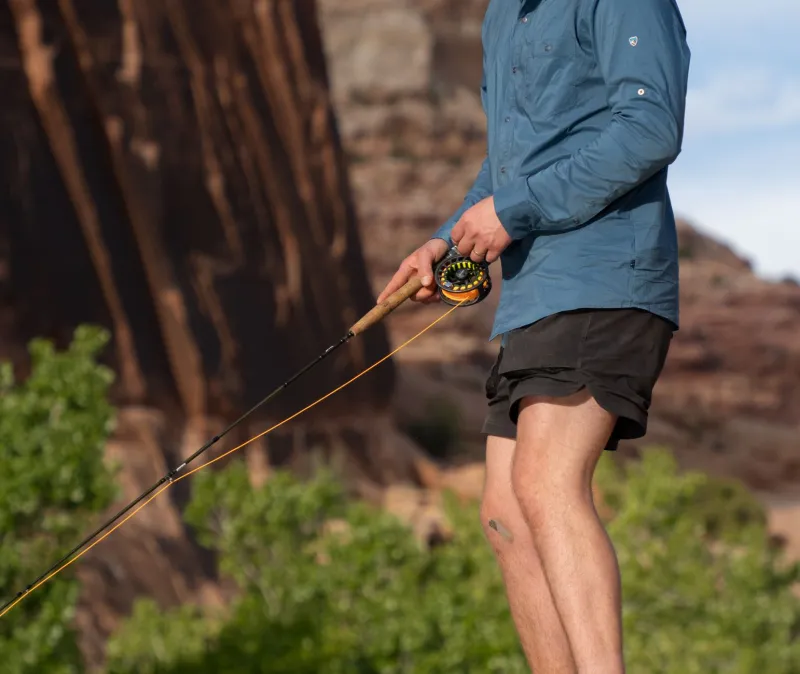
Reel quality is probably the single area where a meaningful upgrade pays the biggest dividends for Utah anglers. The difference between a reel with basic aluminum components and one built with sealed bearings and corrosion-resistant materials isn't just about smoothness—it's about lifespan.
Look for reels that specifically advertise sealed or shielded bearings. On Utah's warm, mineral-rich reservoirs, unsealed bearings are a slow-motion failure waiting to happen. Salt-rated doesn't mean you need to be fishing the ocean; it means the internal components are protected from the kind of dissolved mineral exposure you'll find at Powell or Flaming Gorge.
The finish on the reel body matters too. Anodized aluminum holds up better than painted surfaces, which can chip and expose bare metal to water. Titanium-coated guides on rods are worth the premium for the same reason—they resist pitting and maintain their smoothness across years of use in harsh water conditions.
One habit that extends any reel's life dramatically: rinse it with fresh water after every trip. It sounds obvious, but most people skip it. A quick rinse removes mineral deposits before they have a chance to work into the mechanism.
Fishing Lines and Leaders: Stop Replacing Them So Often
Line is consumable, no question. But you shouldn't be replacing it every few trips because it went brittle or lost its memory. Utah's UV exposure is intense at elevation—places like Strawberry Reservoir sit above 7,600 feet, and the UV index up there is no joke. Fluorocarbon leaders hold up better to UV degradation than mono, and while they cost more per spool, you'll replace them less frequently.
For main line on spinning and baitcasting setups, braided lines handle UV and abrasion better than mono over the long haul. They don't absorb water or take a set from sitting on a spool in a hot truck. If you're fishing structure at Lake Powell or working rocky shorelines for smallmouth, braid's abrasion resistance is a genuine functional advantage, not just a marketing claim.
Store your line out of direct sunlight when you're not fishing. Leaving a rigged rod in the back window of your truck for a week in July is a reliable way to degrade line quality fast.
Climbing Ropes: Sandstone Demands More
A rope rated for 10 UIAA falls on granite will not behave the same way on Utah sandstone. The abrasion profile is completely different. When you're shopping for a rope for desert climbing, sheath thickness is the number that matters most—look for a sheath percentage of at least 38 to 42 percent. Thicker sheaths mean more material between the core and the rock, which translates directly to longer usable life in abrasive conditions.
Dry-treated ropes aren't just for alpine or ice climbing. In Utah's desert environment, a dry treatment reduces the amount of fine sand and grit that gets embedded in the sheath over time. That grit acts like sandpaper on the core from the inside out. A dry-treated rope stays cleaner and stays supple longer.
Inspect your rope regularly and retire it honestly. A rope that looks fine might have internal core damage from repeated contact with sharp sandstone edges. If you're climbing desert cracks and towers regularly, track your falls and retire based on use, not just appearance.
Hardware: The Grit Problem Nobody Talks About
Carabiners, cams, and nuts are tough by design, but Utah's fine desert sand gets into everything. The gates on non-locking carabiners are the most vulnerable point—sand in the gate mechanism creates friction and wear that eventually affects the gate's ability to close cleanly and fully. It's not just annoying; it's a safety issue over time.
The fix is simple and cheap: clean your hardware regularly. A stiff brush, warm water, and a light application of a dry lubricant on the pivot points after cleaning extends hardware life significantly. Avoid oil-based lubricants, which attract more grit.
For cams specifically, the trigger mechanisms on spring-loaded devices are particularly sensitive to sand intrusion. Inspect them before every trip and give them a proper cleaning after any session on dusty desert rock.
Harnesses are another area where Utah's sandstone takes a toll that's easy to overlook. The belay loop and tie-in points are obvious inspection points, but pay attention to the webbing on the waist belt and leg loops where they contact the rock during falls or when you're stemming against a wall. Sandstone abrades webbing faster than most climbers expect.
The Real Calculus: Cost Per Use, Not Sticker Price
The most useful way to think about gear investment isn't budget versus premium—it's cost per use. A $180 reel that lasts eight seasons in Utah's conditions is a better investment than a $90 reel you replace every two years. A $300 rope with a thick sheath that survives two full desert seasons is cheaper in the long run than a lighter, thinner rope you retire after one.
Utah's outdoor environment doesn't care about brand loyalty or price points. It rewards gear that was designed for the specific stresses it puts on equipment. Learn what those stresses are, ask the right questions before you buy, and you'll end up spending less over time—and spending more time out there doing what you came for.