Mud Money: Why Utah's Cloudiest Water Holds the Biggest Fish Nobody's Chasing
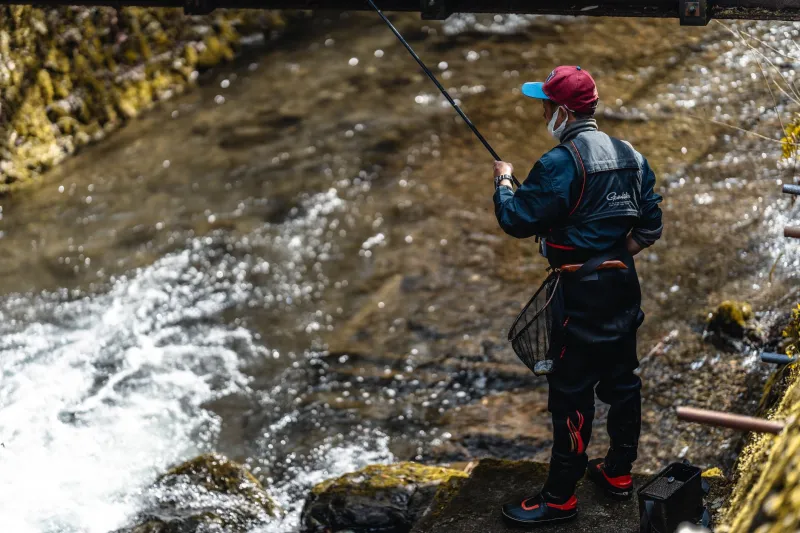
There's a stretch of the Green River below Flaming Gorge where the water turns the color of old coffee. Most anglers pull over, check their maps, and keep driving. Experienced locals do the same. The assumption is universal and almost completely wrong: murky water means bad fishing.
It doesn't. In fact, for a growing number of Utah's most dedicated anglers, that coffee-colored stretch is a destination—not an obstacle.
Why Turbid Water Gets a Bad Reputation
The bias against low-visibility fishing is understandable. Fly fishers are trained to read the water visually—spotting fish, tracking drifts, watching for rises. When you can't see two inches below the surface, the whole system breaks down. Spin anglers and reservoir fishermen aren't much different. Most of us default to clear water because it feels more controllable, more predictable.
But that comfort comes with a serious cost: competition. On any given weekend at a well-known Utah fishing hole, you're sharing water with dozens of other anglers. The fish there have seen every lure in the Cabela's catalog. They're pressured, spooky, and selective in ways that make them genuinely difficult to catch consistently.
The murky stretch down the road? You might have it entirely to yourself.
What the Science Actually Says
Fish behavior in turbid water is well-documented, and the findings are counterintuitive for anyone who's avoided it.
First, reduced light penetration changes how predatory fish hunt. In clear water, species like walleye, bass, and brown trout rely heavily on vision and are acutely aware of threats from above—including you, your shadow, and your fishing line. In turbid conditions, they shift toward their lateral line, a pressure-sensing organ that detects vibration and movement. This makes them simultaneously bolder and more aggressive. They move into shallower areas they'd typically avoid in daylight. They feed more opportunistically. They commit harder to strikes because they can't scrutinize a lure the way they would in gin-clear conditions.
Second, turbid water concentrates fish. Sediment plumes and murky inflows create thermal and chemical gradients that baitfish cluster around. Where baitfish go, predators follow. On Utah's larger reservoirs—Jordanelle, Starvation, and Flaming Gorge among them—seasonal turbidity events after snowmelt or summer storms reliably push fish into predictable zones that most anglers are actively avoiding.
Third, and perhaps most importantly, big fish didn't get big by being stupid. Older, larger fish in heavily pressured water learn to associate clear, calm conditions with danger. Turbid stretches offer them cover they actively seek out.
Techniques That Actually Work When Visibility Drops
Adapting to low-visibility water isn't complicated, but it does require a mindset shift. You're no longer sight-fishing. You're hunting by sound, vibration, and scent.
Go loud and go slow. Rattling crankbaits and lipless lures that produce strong vibration are your best friends in murky water. The fish can't see far, but they can feel the thump of a well-worked lure from a surprising distance. Slow down your retrieve. Give the fish time to zero in.
Use scent. This isn't something most fly-fishing purists want to hear, but scent-enhanced soft plastics and natural bait presentations are dramatically more effective when visibility is low. Powerbait, nightcrawlers, and cut bait all perform exceptionally well in turbid reservoir conditions.
Fish the edges. Turbid water doesn't usually blanket an entire body of water uniformly. There are always transition zones—where murky water meets cleaner water, where a sediment plume dissipates, where a muddy tributary dumps into a clearer cove. These transition lines are ambush points. Fish them hard.
Go darker on lures. This sounds backward, but dark-colored lures create stronger silhouettes in low-visibility conditions. Black, dark brown, and deep purple produce better contrast against the filtered light than bright chartreuse or white—save those for when you want to reflect what little light exists near the surface.
Where to Look in Utah
You don't have to travel far to find productive turbid water. The Colorado River through Moab carries significant sediment loads through much of the spring and early summer, and the catfish and carp fishing during those periods is legitimately excellent—and almost completely ignored by visiting anglers chasing clearer stretches.
Starvation Reservoir near Duchesne turns murky after spring runoff and again after significant summer storms. The walleye fishing during these windows is some of the most consistent in the state, with fish pushing into mid-depth flats that are otherwise tough to work effectively in clear conditions.
The Price River, particularly through the canyon stretches east of Helper, carries turbid water through much of the year due to the geology of the watershed. It's not a glamorous fishery, but the brown trout that live there are wild, underexplored, and surprisingly large.
On the Provo River below Deer Creek, sediment events push fish out of their typical holding lies and into slack-water pockets along the banks. During these windows, fish that are normally almost impossible to approach suddenly become catchable—if you know what you're doing.
The Access Advantage
Beyond the fish behavior itself, there's a practical element to murky-water fishing that's hard to overstate: access points near turbid stretches are almost always less crowded, less maintained, and less obvious on popular fishing apps and forums.
Many of the most productive low-visibility stretches on Utah's rivers require a bit of road-tripping to reach—rough two-tracks, unmarked pullouts, and access points that don't show up on the first page of any Google search. That's a feature, not a bug. A little extra effort on the drive translates directly to fewer people on the water.
Next time you're planning a Utah fishing trip and the conditions look ugly—high water, post-storm runoff, that familiar coffee-brown tint in the river—resist the instinct to wait it out. Pack a selection of rattling lures, rig up something with a little scent, and drive toward the water everyone else is avoiding.
The fish are already there. They're just waiting for someone willing to show up.