Too Many Boots on the Ground: How Utah's Wild Places Are Filling Up—and Where to Escape the Crowds
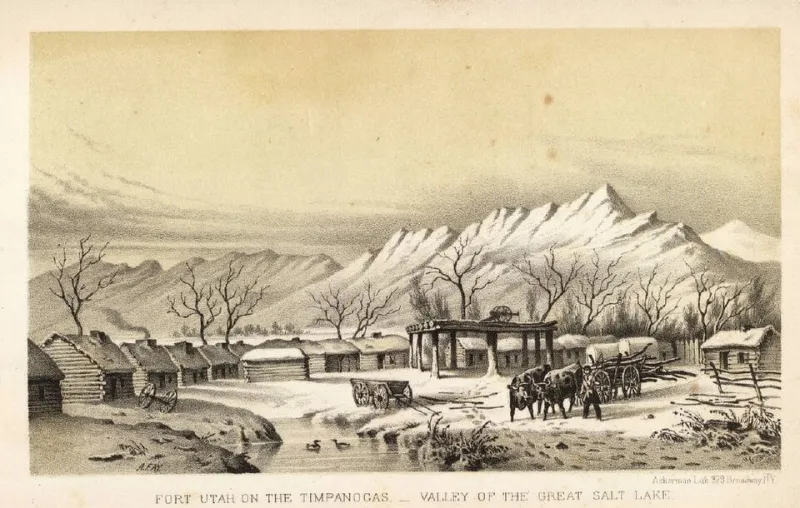
Photo: Howard Stansbury, Public domain, via Wikimedia Commons
There used to be a stretch of the Green River below Flaming Gorge where you could park, walk fifty yards, and have a half-mile of tailwater essentially to yourself on a Tuesday morning. Ask any local who fished it a decade ago and they'll tell you the same story. These days, that same pull-off fills by 7 a.m. on a weekday, and by 9 the riverbank looks less like a fishing destination and more like a fly shop's demo day.
Something shifted. And it didn't happen overnight.
The Numbers Don't Lie
Utah's five national parks collectively drew over 18 million visitors in 2023, but the overflow effect on adjacent outdoor recreation—fishing, climbing, backcountry camping—is where the real story lives. State park visitation has climbed steadily since 2020, when a combination of remote work flexibility, pandemic-era outdoor migration, and an explosion of social media trip content sent people pouring into places that simply weren't built for that kind of traffic.
Flaming Gorge Reservoir, Lake Powell, and Strawberry Reservoir all reported record angler-days in recent years. The Provo River corridor, arguably the most accessible blue-ribbon trout fishery in the state, now sees weekend pressure that rivals anything you'd find in Colorado or Montana. And on the climbing side, popular sport crags like Wall Street in Moab and the Maple Canyon corridor have become so trafficked that bolts are wearing visibly faster than they're being replaced.
The Utah Division of Wildlife Resources has been tracking angler pressure data for years, and the trend lines are hard to argue with. More licenses sold. More out-of-state registrations. More boats launching at ramps that were designed for a fraction of current use.
Why It's Getting Worse Before It Gets Better
A few forces are compounding the problem. First, the algorithm. Any fishing hole or climbing wall that gets tagged on Instagram or featured in a YouTube trip report sees a measurable spike in visitation within weeks. There's no putting that genie back in the bottle. Second, Utah's outdoor recreation infrastructure—the roads, the parking areas, the restroom facilities—was largely built in an era when the state's reputation was more regional than national. The state has struggled to keep pace with demand, and many access points are functionally at capacity during peak season.
Third—and this one stings a little for longtime Utah adventurers—the state's own tourism marketing has been remarkably effective. The "Greatest Snow on Earth" license plate slogan was just the beginning. Utah's five national parks have been packaged and promoted as a unified destination for years now, and that rising tide has lifted all boats, including the ones crowding into spots that used to feel like secrets.
The Real Cost Beyond Inconvenience
Crowding isn't just an annoyance. It carries real ecological weight. Streambank erosion accelerates when dozens of wading anglers work the same bends day after day. Climbing chalk accumulates on desert sandstone in ways that affect both the aesthetic experience and, some researchers argue, the surface texture of the rock itself. Campfire rings multiply. Trash accumulates. Wildlife corridors get interrupted.
At Strawberry Reservoir, heavy boat traffic during the summer has been linked to increased aquatic invasive species risk—more hull inspections required, more vectors for things like quagga mussels to hitch a ride. The reservoir's trophy fishery, one of the best in the Intermountain West for rainbow and cutthroat trout, depends on careful management that becomes harder to execute when visitation pressure is this high.
None of this means you should stop going. It means you should go smarter.
Where the Quiet Water Still Exists
The good news: Utah is enormous, and the vast majority of its fishing and climbing terrain receives a fraction of the attention that the headline destinations do.
The Duchesne River drainage in the Uinta Basin is a legitimate alternative to the Green River corridor for serious trout anglers. It's less convenient, requires more driving, and doesn't have the same concentration of fly shops and outfitters nearby—which is exactly why it's worth the effort. Browns and rainbows hold in stretches that see a handful of anglers on a busy weekend.
Scofield Reservoir, tucked into the Wasatch Plateau at around 7,600 feet, punches well above its weight for tiger trout and rainbow fishing, and it almost never makes the "best of" lists that drive traffic to better-known waters. The access road keeps casual visitors away during shoulder seasons, which is a feature, not a bug.
For climbers, the San Rafael Swell offers a sprawling network of desert towers, crack systems, and bouldering that would take multiple lifetimes to fully explore—and it draws a sliver of the visitation that Moab sees on any given weekend. The trade-off is logistics: you're self-sufficient out there, and the approaches aren't always obvious. But that's the price of solitude, and most serious climbers consider it a bargain.
The Beaver Mountain area in Cache County has sport and trad climbing that routinely gets overlooked in favor of Logan Canyon's more famous walls. Same quality of stone, dramatically fewer people.
Timing Is Its Own Strategy
If moving to a lesser-known spot isn't in the cards—maybe you've got a specific river in mind, or you're chasing a route you've been projecting for months—timing becomes your best tool. The data on visitation patterns is pretty consistent: weekday mornings before 8 a.m. and shoulder-season windows (late October through early November, late March before spring break traffic hits) offer dramatically reduced competition for water and wall space.
On the reservoirs, early-morning launches during the week in September and October can feel like a different planet compared to a July Saturday. Fish are often more active in the cooler temps anyway. It's a rare case where the uncrowded window and the optimal fishing window overlap almost perfectly.
A Different Way to Think About It
There's a version of this conversation that ends with a list of secret spots and GPS coordinates, but that's precisely the kind of content that created this problem in the first place. The better frame is this: Utah has more quality fishing and climbing terrain than any single adventurer could realistically explore in a lifetime. The spots that feel crowded are crowded because they're easy to find and easy to access. The ones that aren't crowded require a little more effort, a little more planning, and sometimes a willingness to drive past the obvious turnoff.
Cast off from the familiar. Climb up past the trailhead everyone else stops at. The genuine quiet is still out there—it's just not waiting for you at the first parking area on the left.